
Test Your Knowledge of : proportionality
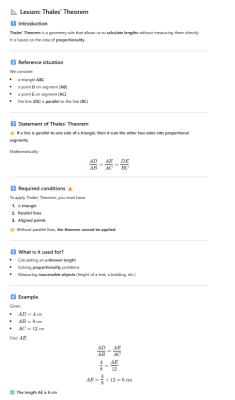
Quiz on Proportionality
Engaging in quizzes on proportionality offers a multitude of benefits, both educational and practical. Proportionality is a fundamental concept in mathematics and science, playing a crucial role in understanding relationships between quantities. By participating in quizzes on this topic, learners can deepen their comprehension of how different variables interact and influence each other.
Firstly, quizzes on proportionality help reinforce mathematical skills. They provide an opportunity to practice calculations involving ratios, fractions, and percentages, which are essential for solving real-world problems. This practice enhances numerical literacy and boosts confidence in handling mathematical tasks.
Moreover, understanding proportionality is vital in various fields such as physics, chemistry, and economics. For instance, in physics, it helps explain concepts like speed, density, and force. In chemistry, it is crucial for understanding concentration and reaction rates. Quizzes can help solidify these concepts, making them more accessible and easier to apply in practical scenarios.
Quizzes also promote critical thinking and problem-solving skills. They often present scenarios that require learners to analyze relationships and make predictions based on proportional reasoning. This analytical approach is invaluable in academic settings and everyday decision-making.
Additionally, quizzes on proportionality can be a fun and interactive way to learn. They often incorporate real-life examples and applications, making the learning process more engaging and relatable. This interactive element can motivate learners to explore the subject further and develop a genuine interest in mathematics and science.
Finally, regular participation in quizzes can track progress and identify areas that need improvement. This feedback loop is essential for continuous learning and mastery of the subject.
In summary, quizzes on proportionality are an effective educational tool that enhances mathematical skills, supports interdisciplinary learning, fosters critical thinking, and provides an engaging learning experience. They are an excellent way to build a strong foundation in understanding the relationships between quantities.