
Quiz - History of Periodic Classification
Number of questions :
8
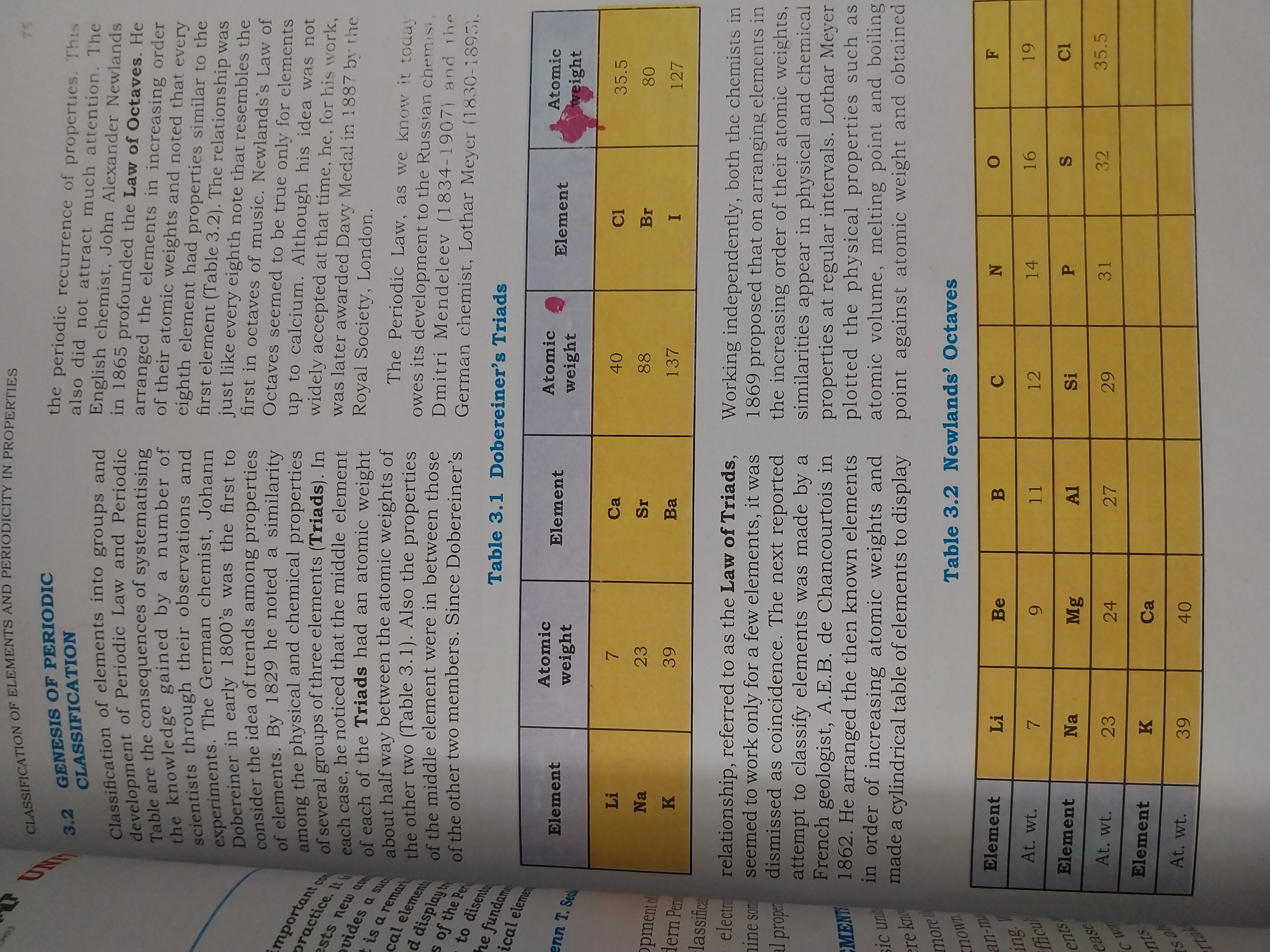
This document discusses the historical development of the periodic classification of elements, focusing on the contributions of scientists like Johann Döbereiner and John Newlands. It explains the concepts of Triads and the Law of Octaves, which were early attempts to organize elements based on their properties.
Understanding the periodic classification of elements is crucial for several reasons:
- Historical Insight: Learning about the contributions of scientists like Döbereiner and Newlands provides a historical perspective on how scientific ideas evolve. This knowledge highlights the trial-and-error process that leads to significant scientific breakthroughs.
- Chemical Knowledge: The periodic table is a fundamental tool in chemistry. Understanding its development helps in grasping how elements are organized based on their properties, which is essential for predicting chemical behavior and reactions.
- Scientific Methodology: The document illustrates the scientific method, showcasing how hypotheses are tested, refined, or discarded. This is a valuable lesson in critical thinking and problem-solving.
- Interdisciplinary Connections: The development of the periodic table connects chemistry with physics and mathematics, demonstrating the interdisciplinary nature of scientific inquiry.
- Appreciation of Innovation: Recognizing the innovative ideas of early scientists fosters an appreciation for creativity and persistence in scientific endeavors.
By engaging with this quiz, you will deepen your understanding of the periodic table's history, enhance your chemical knowledge, and appreciate the scientific process. This foundational knowledge is not only academically enriching but also practically useful in various scientific and educational contexts.
You may be interested in these quizzes
Mendeleev's Periodic Table Development
Chemistry
History of Science
Periodic Table
23/08/2026
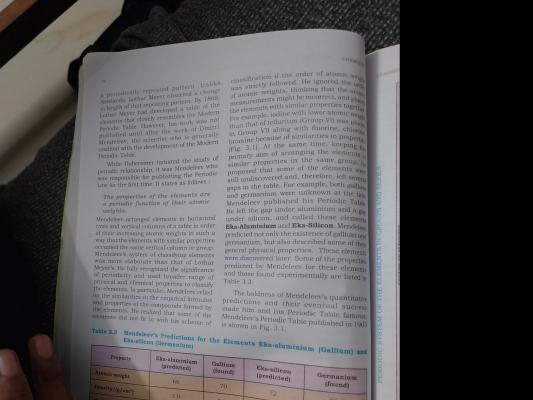
This document discusses the development of the periodic table, focusing on Mendeleev's contributions. It highlights the periodicity of elements based on atomic weights and Mendeleev's predictions for undiscovered elements like eka-aluminium and eka-silicon, which were later identified as gallium and germanium.
Number of questions : 8
History of Periodic Classification
Chemistry
History of Science
Periodic Table
23/08/2026
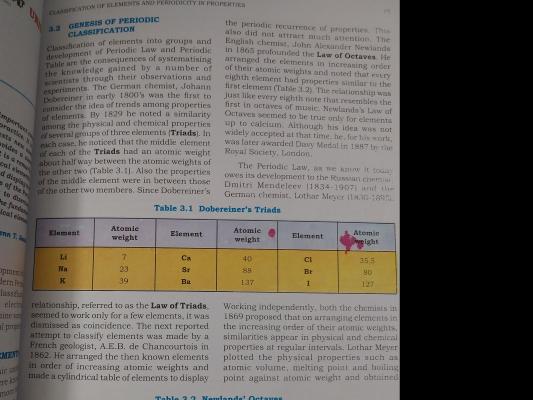
This document discusses the historical development of the periodic classification of elements, focusing on the contributions of scientists like Johann Döbereiner and John Newlands. It explains the concepts of Triads and the Law of Octaves, which were early attempts to organize elements based on their properties.
Number of questions : 8
Modern Periodic Table Development
Chemistry
History of Science
Periodic Table
23/08/2026
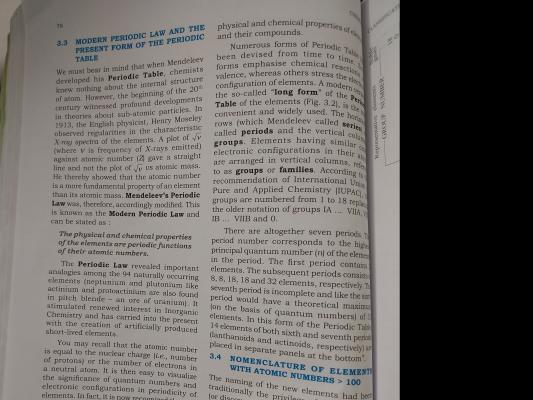
This document discusses the development of the modern periodic table, highlighting Mendeleev's contributions and subsequent modifications by Moseley. It explains the periodic law, the arrangement of elements, and the significance of atomic numbers. The document also touches on the nomenclature of elements with atomic numbers greater than 100.
Number of questions : 8
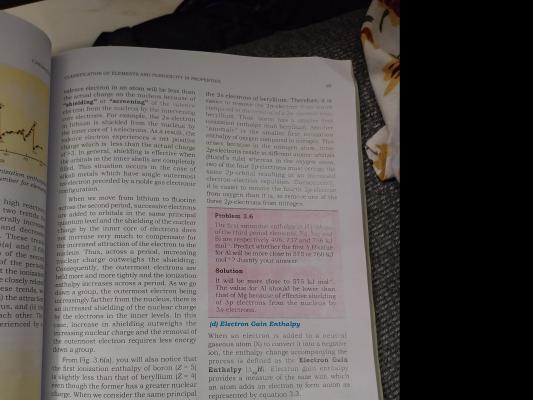
Classification of Elements and Periodicity
Chemistry
Periodic Table
Atomic Structure
23/08/2026
This document explains the classification of elements and periodicity in properties, focusing on concepts like shielding, ionization enthalpy, and electron gain enthalpy. It discusses how these properties vary across periods and groups in the periodic table, using examples like lithium, beryllium, and boron.
Number of questions : 8
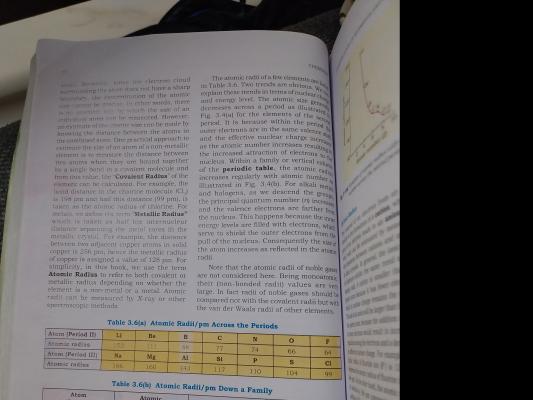
Atomic Radii and Periodic Trends
Chemistry
Periodic Table
Atomic Structure
23/08/2026
This document explains the concept of atomic radii, including covalent and metallic radii, and how they vary across periods and down groups in the periodic table. It includes tables showing atomic radii for various elements, illustrating trends and providing a basis for understanding atomic size variations.
Number of questions : 8
History and Development of Atomic Theory
Chemistry
History of Science
Physics
23/08/2026
This document discusses the historical development of atomic theory, starting from early philosophical ideas to John Dalton's scientific proposal in 1808. It highlights the evolution of the concept of atoms as indivisible particles and the challenges faced in experimental validation.
Number of questions : 8
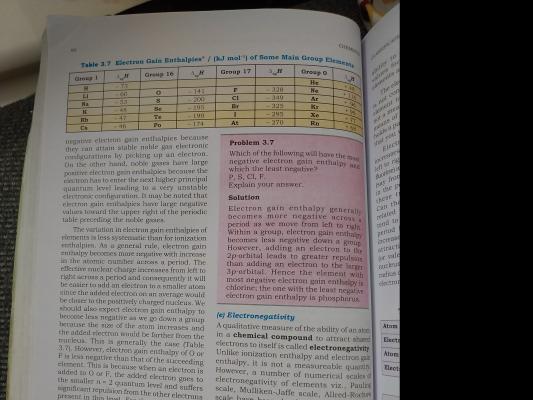
Electron Gain and Electronegativity
Chemistry
Periodic Table
Atomic Properties
23/08/2026
This document discusses electron gain enthalpies and electronegativity, focusing on how atoms attract electrons. It includes a table of electron gain enthalpies for various elements and explains trends across periods and groups. The document also introduces different scales for measuring electronegativity.
Number of questions : 8