
Quiz - Classification and Periodic Trends
Number of questions :
8
This document discusses the classification of elements into metals, non-metals, and metalloids, and explores periodic trends in their properties. It explains how elements are organized in the periodic table and describes trends such as atomic radius, ionization enthalpy, and electronegativity.
Understanding the classification of elements and periodic trends is crucial for several reasons:
- Foundation of Chemistry: Knowing how elements are classified helps in understanding their chemical behavior and reactions. This knowledge is fundamental for anyone studying or working in chemistry or related fields.
- Predicting Properties: By understanding periodic trends, such as atomic radius and electronegativity, you can predict how elements will interact with each other. This is essential for tasks ranging from creating new materials to understanding biological processes.
- Real-World Applications: The principles of element classification and periodic trends are applied in industries such as pharmaceuticals, materials science, and environmental science. For example, knowing which elements are likely to conduct electricity can guide the development of new electronic devices.
- Critical Thinking: Engaging with these concepts enhances analytical skills. You learn to observe patterns, make predictions, and solve complex problems, which are valuable skills in any scientific endeavor.
- Interdisciplinary Relevance: The knowledge gained from this quiz is not limited to chemistry. It has implications in physics, biology, and engineering, making it a versatile and valuable area of study.
In summary, this quiz not only reinforces your understanding of chemistry but also equips you with skills and knowledge applicable across various scientific disciplines.
You may be interested in these quizzes
Classification and Periodic Trends
Chemistry
Periodic Table
Element Properties
23/08/2026
This document discusses the classification of elements into metals, non-metals, and metalloids, and explores periodic trends in their properties. It explains how elements are organized in the periodic table and describes trends such as atomic radius, ionization enthalpy, and electronegativity.
Number of questions : 8
Periodic Table Element Classification
Chemistry
Periodic Table
Element Properties
23/08/2026
This document explains the classification of elements in the periodic table, focusing on p-block, d-block, and f-block elements. It discusses their electronic configurations, properties, and reactivity. The document also touches on the concept of transition elements and inner-transition elements.
Number of questions : 8
Classification of Elements and Periodicity
Chemistry
Periodic Table
Atomic Structure
23/08/2026
This document explains the classification of elements and periodicity in properties, focusing on concepts like shielding, ionization enthalpy, and electron gain enthalpy. It discusses how these properties vary across periods and groups in the periodic table, using examples like lithium, beryllium, and boron.
Number of questions : 8
Atomic Radii and Periodic Trends
Chemistry
Periodic Table
Atomic Structure
23/08/2026
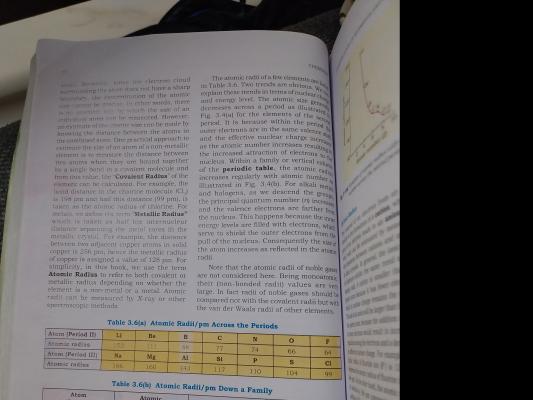
This document explains the concept of atomic radii, including covalent and metallic radii, and how they vary across periods and down groups in the periodic table. It includes tables showing atomic radii for various elements, illustrating trends and providing a basis for understanding atomic size variations.
Number of questions : 8
Mendeleev's Periodic Table Development
Chemistry
History of Science
Periodic Table
23/08/2026
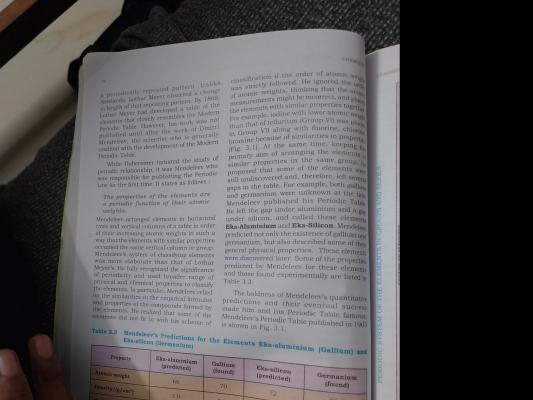
This document discusses the development of the periodic table, focusing on Mendeleev's contributions. It highlights the periodicity of elements based on atomic weights and Mendeleev's predictions for undiscovered elements like eka-aluminium and eka-silicon, which were later identified as gallium and germanium.
Number of questions : 8
History of Periodic Classification
Chemistry
History of Science
Periodic Table
23/08/2026
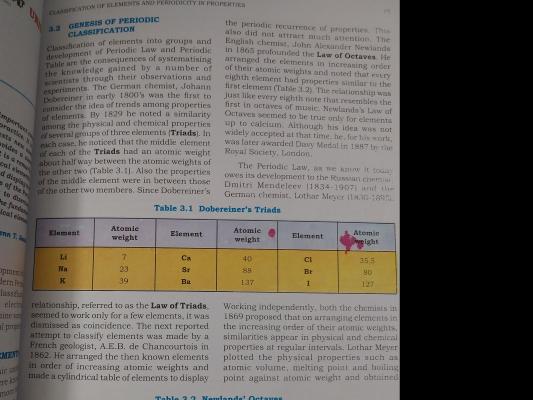
This document discusses the historical development of the periodic classification of elements, focusing on the contributions of scientists like Johann Döbereiner and John Newlands. It explains the concepts of Triads and the Law of Octaves, which were early attempts to organize elements based on their properties.
Number of questions : 8
Electron Gain and Electronegativity
Chemistry
Periodic Table
Atomic Properties
23/08/2026
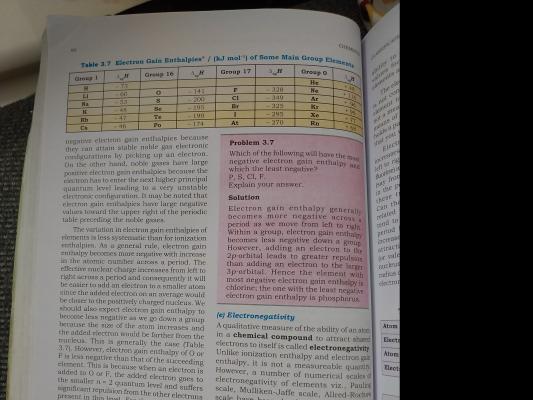
This document discusses electron gain enthalpies and electronegativity, focusing on how atoms attract electrons. It includes a table of electron gain enthalpies for various elements and explains trends across periods and groups. The document also introduces different scales for measuring electronegativity.
Number of questions : 8