
Quiz - Biology Class: Genetic Inheritance
Number of questions :
8
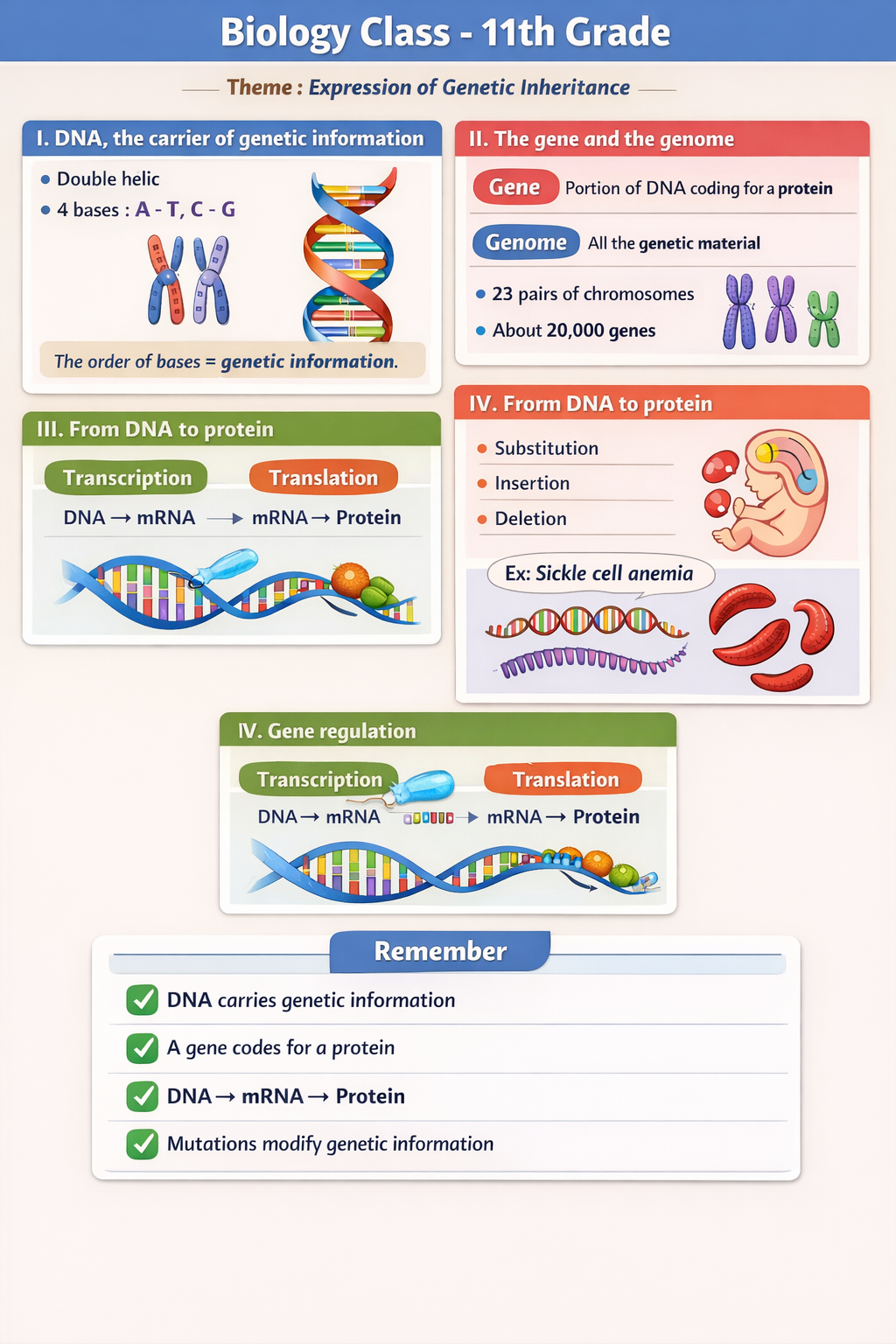
This document is a biology class overview for 11th grade, focusing on the expression of genetic inheritance. It covers DNA structure, gene and genome concepts, protein synthesis, and gene regulation, including transcription and translation processes.
Understanding genetic inheritance is crucial for several reasons:
- Foundation of Biology: Grasping the basics of DNA, genes, and genomes is essential for any further study in biology and related sciences. It forms the groundwork for understanding how traits are passed from one generation to the next.
- Medical Insights: Knowledge of genetic processes such as transcription and translation is vital for understanding diseases like sickle cell anemia. This can lead to better diagnostic and therapeutic strategies.
- Biotechnological Applications: Understanding gene regulation and protein synthesis is key in biotechnology, where genetic engineering and synthetic biology are rapidly advancing fields.
- Informed Decisions: With the rise of genetic testing, having a basic understanding of genetics can help individuals make informed decisions about their health and lifestyle.
- Ethical Considerations: As genetic technologies advance, ethical questions arise. Being informed allows individuals to engage in discussions about the implications of genetic research and technology.
In summary, this quiz not only reinforces fundamental biological concepts but also prepares you to engage with contemporary scientific and ethical issues. It enhances your scientific literacy, which is increasingly important in a world where genetic information plays a significant role in various aspects of life.
You may be interested in these quizzes
Biology Class: Genetic Inheritance
Biology
Genetics
Molecular Biology
17/02/2026
This document is a biology class overview for 11th grade, focusing on the expression of genetic inheritance. It covers DNA structure, gene and genome concepts, protein synthesis, and gene regulation, including transcription and translation processes.
Number of questions : 8
DNA, Genes, and Chromosomes
Genetics
Biology
Molecular Biology
17/12/2025
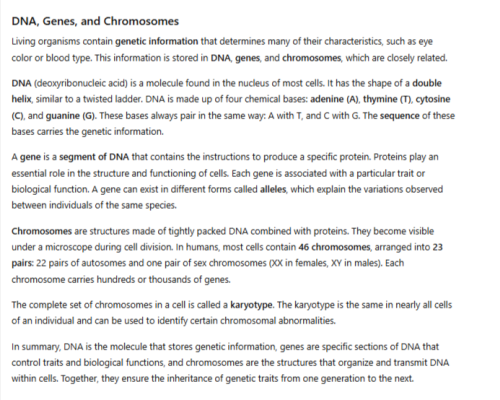
The document explains the relationship between DNA, genes, and chromosomes, highlighting their roles in storing and transmitting genetic information. It describes the structure of DNA, the function of genes, and the organization of chromosomes, including the concept of karyotypes and alleles.
Number of questions : 8
Reproduction: Definitions and Concepts
Biology
Reproduction
Genetics
24/03/2026
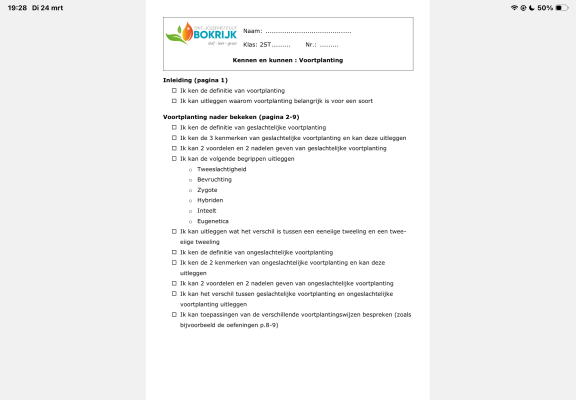
This document is an educational outline on reproduction, covering definitions, characteristics, advantages, and disadvantages of sexual and asexual reproduction. It includes key terms like fertilization, zygote, and inbreeding, and explains differences between types of twins and reproduction methods.
Number of questions : 8
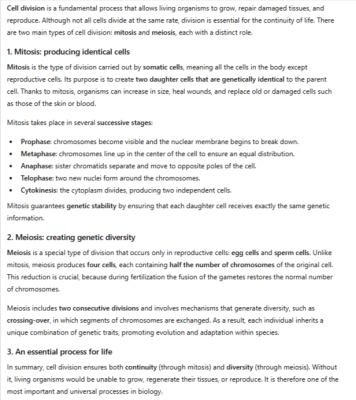
Cell Division: Mitosis and Meiosis
Biology
Genetics
Cellular Processes
08/12/2025
The document explains cell division, focusing on mitosis and meiosis. It details the stages of mitosis, the genetic diversity created by meiosis, and the importance of these processes for growth, repair, and reproduction in living organisms.
Number of questions : 8
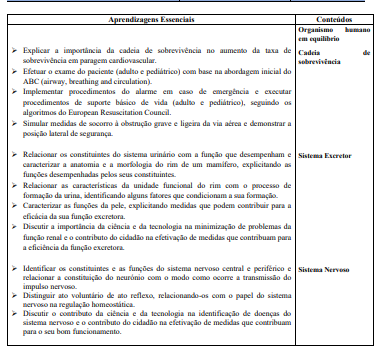
Human Body Systems Overview
Biology
Health Education
Emergency Response
22/03/2026
This document outlines essential learning objectives and content related to human body systems, focusing on survival chains, the excretory system, and the nervous system. It emphasizes the importance of understanding these systems for medical emergencies and effective health interventions.
Number of questions : 8
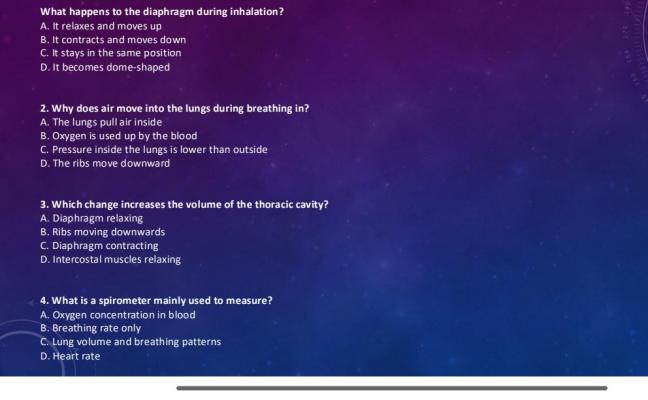
Breathing Mechanics and Spirometry
Biology
Human Physiology
Respiratory System
15/02/2026
This document covers the mechanics of breathing, focusing on the diaphragm's role, air pressure differences, and the use of a spirometer to measure lung function.
Number of questions : 8
Breathing and Alveoli Adaptations
Biology
Human Anatomy
Respiratory System
15/02/2026
The document discusses the respiratory system, focusing on breathing, alveoli adaptations, and encourages further inquiry into the topic.
Number of questions : 8