
Quiz - Introduction to OOP and Java
Number of questions :
8
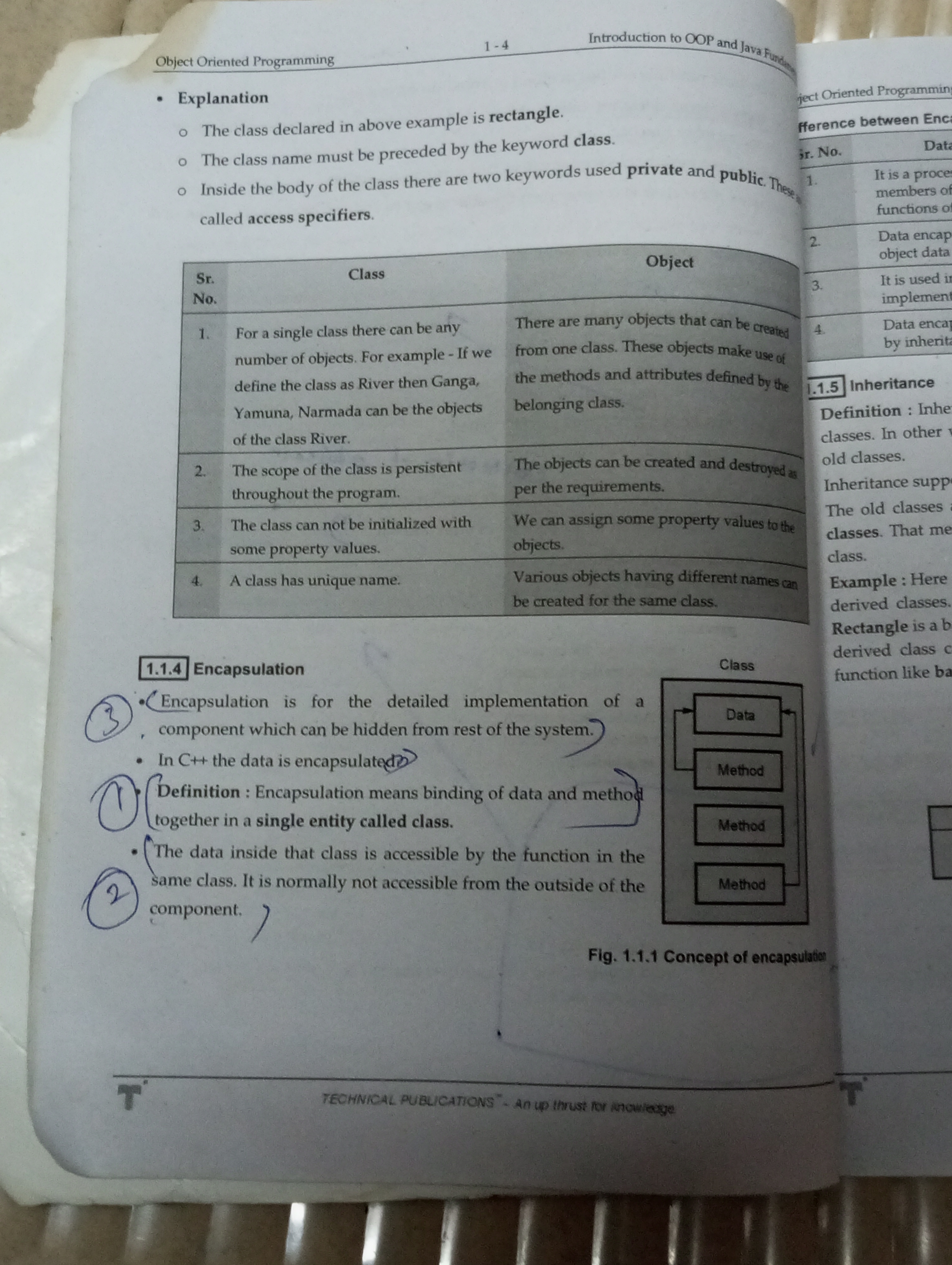
This document introduces the concepts of Object-Oriented Programming (OOP) and Java. It explains the structure of classes and objects, the principles of encapsulation, and the use of access specifiers like private and public. It also touches on inheritance and the persistence of class scope.
Understanding Object-Oriented Programming (OOP) and Java is crucial for modern software development.
- Programming Skills: By mastering OOP concepts such as classes, objects, encapsulation, and inheritance, you can write more efficient and organized code. This is essential for developing complex applications.
- Problem-Solving: OOP encourages thinking in terms of real-world entities, making it easier to model and solve complex problems. This approach enhances your analytical skills and ability to break down large problems into manageable parts.
- Career Opportunities: Java is one of the most popular programming languages, widely used in various industries. Proficiency in Java and OOP can open doors to numerous job opportunities in software development, web development, and mobile app development.
- Software Maintenance: Understanding encapsulation and access specifiers helps in maintaining and updating software. It ensures that changes in one part of the program do not adversely affect other parts, making the software more robust and adaptable.
- Collaboration: Knowledge of OOP principles facilitates better collaboration in team environments. It allows for clear communication of ideas and more efficient division of labor among team members.
Overall, this quiz not only tests your knowledge but also reinforces key concepts that are foundational to becoming a proficient programmer. Embracing these principles will significantly enhance your ability to create scalable, maintainable, and high-quality software solutions.
You may be interested in these quizzes
Introduction to OOP and Java
Programming
Computer Science
Java
22/05/2026
This document introduces the concepts of Object-Oriented Programming (OOP) and Java. It explains the structure of classes and objects, the principles of encapsulation, and the use of access specifiers like private and public. It also touches on inheritance and the persistence of class scope.
Number of questions : 8
Computer Science Illustrated Guide
Computer Science
Programming
Networking
08/03/2026
This infographic provides an overview of key concepts in computer science, including algorithms, data structures, computer architecture, operating systems, programming languages, networking, security, AI, and databases. It highlights the importance of abstraction and problem-solving in the field.
Number of questions : 8
Theory and Object-Oriented Design
Computer Science
Automata Theory
Object-Oriented Design
22/05/2026
This document outlines the objectives and content of two computer science courses: Theory of Computation and Object-Oriented Analysis and Design. It covers topics such as automata, regular expressions, context-free grammars, Turing machines, and object modeling. The document also lists references and expected outcomes for students.
Number of questions : 8
Computer Science Study Guide

Computer Science
Information Technology
Education
22/08/2026
This document appears to be a page from a textbook or study guide, focusing on computer science concepts. It includes definitions, historical notes, and technical terms related to computers and information technology.
Number of questions : 8
Basic Computer Functions Overview

Technology
Computer Science
Software
16/03/2026
This document provides an overview of basic computer functions, software types, file management, and storage conversion. It includes information on system and application software, file naming conventions, and practical tips for using word processors. Additionally, it covers storage units and their conversions.
Number of questions : 8
Introduction to Artificial Intelligence
Technology
Computer Science
Artificial Intelligence
24/12/2025
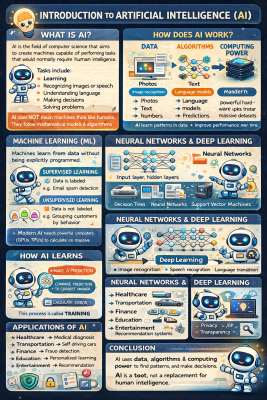
This document provides an overview of artificial intelligence (AI), explaining its definition, how it works, and its applications. It covers machine learning, neural networks, and deep learning, highlighting the importance of data, algorithms, and computing power in AI. The document concludes with AI's role as a tool, not a replacement for human intelligence.
Number of questions : 8