
Quiz - History and Development of Atomic Theory
Question 7 / 8
What scientific law did Dalton's theory successfully explain?
You may be interested in these quizzes
History and Development of Atomic Theory
Chemistry
History of Science
Physics
23/08/2026
This document discusses the historical development of atomic theory, starting from early philosophical ideas to John Dalton's scientific proposal in 1808. It highlights the evolution of the concept of atoms as indivisible particles and the challenges faced in experimental validation.
Number of questions : 8
Mendeleev's Periodic Table Development
Chemistry
History of Science
Periodic Table
23/08/2026
This document discusses the development of the periodic table, focusing on Mendeleev's contributions. It highlights the periodicity of elements based on atomic weights and Mendeleev's predictions for undiscovered elements like eka-aluminium and eka-silicon, which were later identified as gallium and germanium.
Number of questions : 8
History of Periodic Classification
Chemistry
History of Science
Periodic Table
23/08/2026
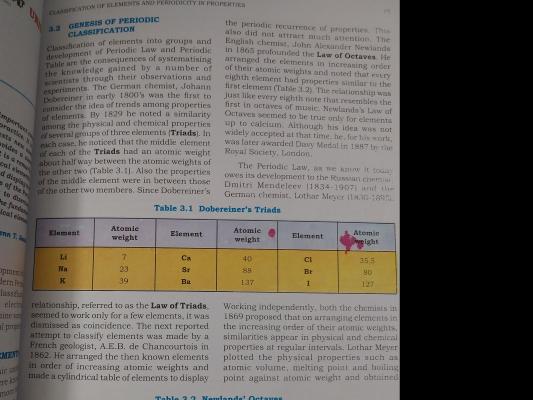
This document discusses the historical development of the periodic classification of elements, focusing on the contributions of scientists like Johann Döbereiner and John Newlands. It explains the concepts of Triads and the Law of Octaves, which were early attempts to organize elements based on their properties.
Number of questions : 8
Aristotle's Fallacy and Inertia
Physics
History of Science
Mechanics
31/08/2026
This document discusses Aristotle's fallacy regarding motion and the development of the law of inertia by Galileo. It explains how external forces like friction affect motion and how Galileo's experiments led to a better understanding of uniform motion.
Number of questions : 8
Evolution of Motion Concepts
Physics
History of Science
Classical Mechanics
31/08/2026
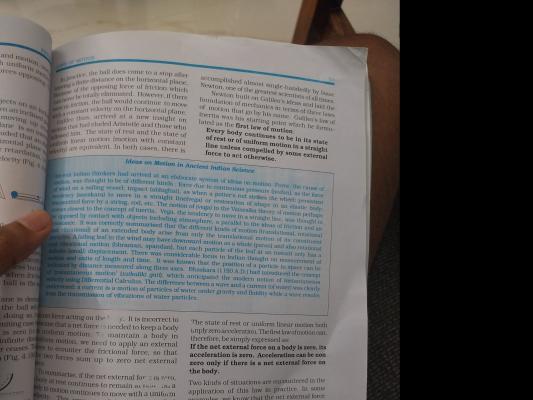
This document discusses the evolution of motion concepts from ancient Indian science to Newton's first law of motion. It highlights the contributions of Galileo and Newton in understanding motion, inertia, and the necessity of external forces to change an object's state of motion.
Number of questions : 8
Cathode Rays and Discharge Tubes
Physics
History of Science
Electromagnetism
23/08/2026
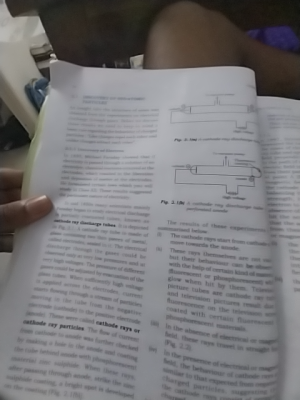
The document discusses the discovery and properties of cathode rays, including experiments with discharge tubes and the behavior of these rays under different conditions.
Number of questions : 8
Modern Periodic Table Development
Chemistry
History of Science
Periodic Table
23/08/2026
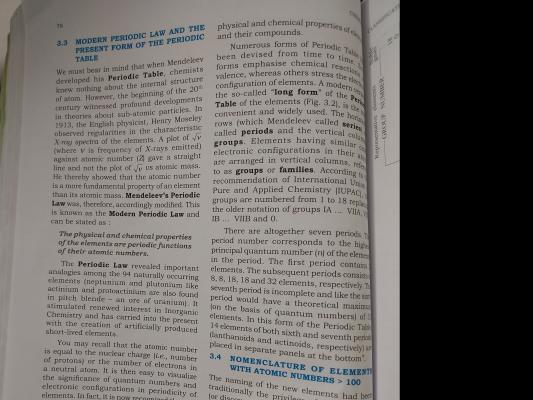
This document discusses the development of the modern periodic table, highlighting Mendeleev's contributions and subsequent modifications by Moseley. It explains the periodic law, the arrangement of elements, and the significance of atomic numbers. The document also touches on the nomenclature of elements with atomic numbers greater than 100.
Number of questions : 8