Quiz - Evolution of Motion Concepts

Understanding the Evolution of Motion Concepts
Studying the evolution of motion concepts from ancient Indian science to Newton's laws provides a comprehensive view of how scientific thought has developed over centuries.
- Historical Insight: By exploring ancient Indian contributions, you gain an appreciation for early scientific endeavors and how they laid the groundwork for future discoveries.
- Scientific Foundations: Understanding Newton's first law of motion is crucial for grasping the basics of classical mechanics, which is foundational for physics and engineering.
- Interdisciplinary Connections: The document bridges history, science, and philosophy, showing how ideas evolve and influence each other across disciplines.
- Critical Thinking: Analyzing how different cultures approached the concept of motion encourages critical thinking and a broader perspective on scientific inquiry.
- Appreciation of Scientific Progress: Recognizing the contributions of thinkers like Galileo and Newton highlights the importance of building on previous knowledge to advance science.
This quiz not only tests your knowledge but also enriches your understanding of how scientific concepts are interconnected and evolve over time. Such knowledge is essential for anyone interested in the history of science, physics, or the philosophy of science.
You may be interested in these quizzes
Evolution of Motion Concepts

Aristotle's Fallacy and Inertia
Cathode Rays and Discharge Tubes

History and Development of Atomic Theory
Mendeleev's Periodic Table Development
History of Periodic Classification

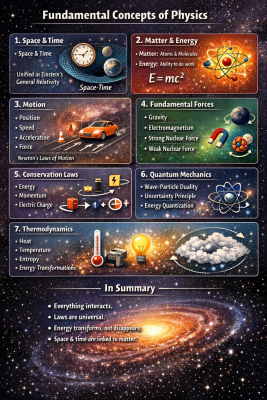
Fundamental Concepts of Physics