
Quiz - History and Development of Atomic Theory
Question 8 / 8
What was a common experiment mentioned that failed to support Dalton's theory?
You may be interested in these quizzes
History and Development of Atomic Theory
Chemistry
History of Science
Physics
23/08/2026
This document discusses the historical development of atomic theory, starting from early philosophical ideas to John Dalton's scientific proposal in 1808. It highlights the evolution of the concept of atoms as indivisible particles and the challenges faced in experimental validation.
Number of questions : 8
Mendeleev's Periodic Table Development
Chemistry
History of Science
Periodic Table
23/08/2026
This document discusses the development of the periodic table, focusing on Mendeleev's contributions. It highlights the periodicity of elements based on atomic weights and Mendeleev's predictions for undiscovered elements like eka-aluminium and eka-silicon, which were later identified as gallium and germanium.
Number of questions : 8
History of Periodic Classification
Chemistry
History of Science
Periodic Table
23/08/2026
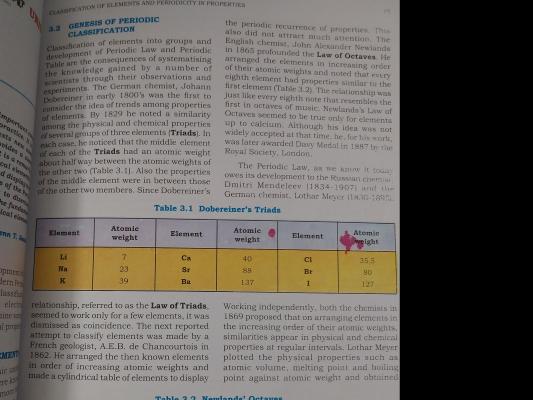
This document discusses the historical development of the periodic classification of elements, focusing on the contributions of scientists like Johann Döbereiner and John Newlands. It explains the concepts of Triads and the Law of Octaves, which were early attempts to organize elements based on their properties.
Number of questions : 8
Aristotle's Fallacy and Inertia
Physics
History of Science
Mechanics
31/08/2026
This document discusses Aristotle's fallacy regarding motion and the development of the law of inertia by Galileo. It explains how external forces like friction affect motion and how Galileo's experiments led to a better understanding of uniform motion.
Number of questions : 8
Understanding Isotopes and Mass
Chemistry
Physics
Atomic Structure
28/10/2026
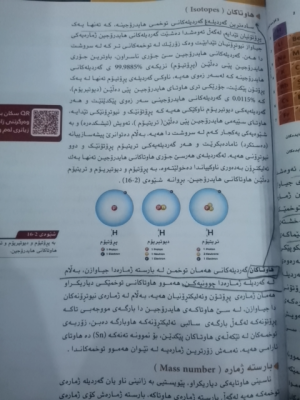
This document explains isotopes, focusing on hydrogen isotopes and their properties. It discusses atomic structure, isotopic abundance, and mass number, providing visual diagrams for better understanding.
Number of questions : 8
Evolution of Motion Concepts
Physics
History of Science
Classical Mechanics
31/08/2026
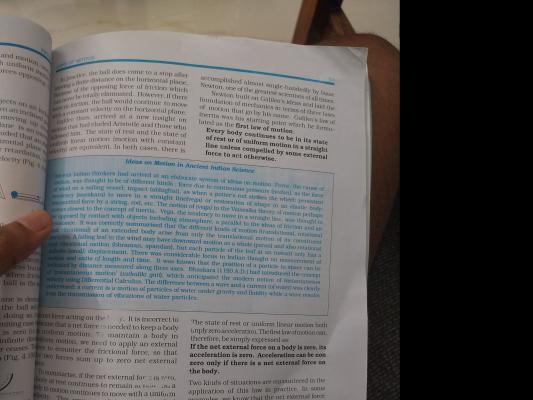
This document discusses the evolution of motion concepts from ancient Indian science to Newton's first law of motion. It highlights the contributions of Galileo and Newton in understanding motion, inertia, and the necessity of external forces to change an object's state of motion.
Number of questions : 8
Cathode Rays and Discharge Tubes
Physics
History of Science
Electromagnetism
23/08/2026
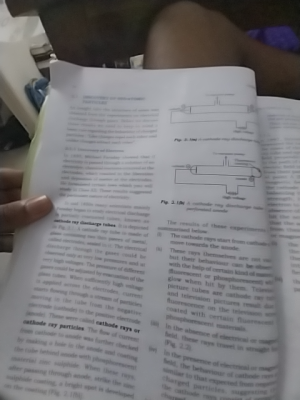
The document discusses the discovery and properties of cathode rays, including experiments with discharge tubes and the behavior of these rays under different conditions.
Number of questions : 8