
Quiz - Biology Notes: Ecosystems and Species


Number of questions :
8
This document appears to be a student's notebook page containing questions and answers related to biology, specifically focusing on ecosystems, native species, and biodiversity.
Understanding ecosystems and biodiversity is crucial for several reasons:
- Environmental Awareness: By learning about ecosystems, you gain insight into how different species interact with each other and their environment. This knowledge is essential for understanding the balance of nature and the impact of human activities.
- Conservation Efforts: Recognizing the importance of native species and the threats posed by invasive species can lead to more effective conservation strategies. Protecting biodiversity ensures the stability and resilience of ecosystems, which are vital for human survival.
- Sustainability: Biodiversity contributes to ecosystem services such as pollination, water purification, and climate regulation. Understanding these services highlights the importance of sustainable practices that support both human needs and environmental health.
- Global Challenges: Addressing issues like climate change and habitat destruction requires a solid understanding of ecological principles. This quiz encourages critical thinking about these global challenges and the role individuals can play in mitigating them.
By engaging with this quiz, you enhance your knowledge of biology and ecology, equipping yourself with the tools to make informed decisions about environmental issues. This awareness is not only academically enriching but also empowers you to contribute positively to the world.
You may be interested in these quizzes
Biology Notes: Ecosystems and Species
Biology
Ecology
Biodiversity
02/11/2026
This document appears to be a student's notebook page containing questions and answers related to biology, specifically focusing on ecosystems, native species, and biodiversity.
Number of questions : 8
Different Types of Nutrition

Biology
Ecology
Microbiology
08/02/2026
The document discusses different types of nutrition, focusing on heterotrophic and mixotrophic nutrition. It explains how organisms obtain nutrients from other organisms, detailing saprophytic and parasitic nutrition. The role of saprophytes in the ecosystem and their importance in nutrient cycles is also highlighted.
Number of questions : 8
Overview of Worm Phyla

Biology
Zoology
Ecology
14/01/2026
The document provides an overview of two phyla of worms: Platyhelminthes and Nematoda. It describes their characteristics, examples, and significance. The text includes diagrams and highlights specific species like Fasciola and Taenia, explaining their biological and ecological roles.
Number of questions : 8
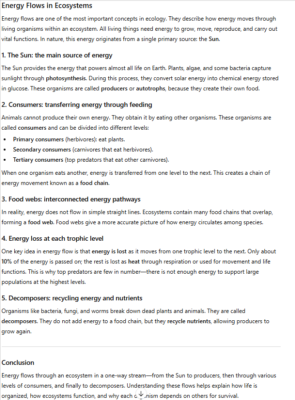
Energy Flows in Ecosystems
Ecology
Biology
Environmental Science
08/12/2025
The document explains how energy flows through ecosystems, highlighting the roles of the Sun, consumers, and decomposers. It covers energy transfer through feeding, interconnected pathways, and energy loss at each trophic level. The conclusion emphasizes the importance of understanding these processes for ecosystem health.
Number of questions : 8
Endangered Species Educational Page
Biology
Conservation
Wildlife
27/08/2026
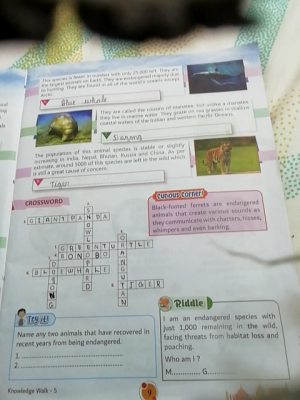
This document is an educational page about endangered species, featuring a crossword puzzle, riddles, and facts about animals like the blue whale, dugong, and tiger. It aims to raise awareness about conservation efforts and the importance of protecting these species.
Number of questions : 8
Human Body Systems Overview
Biology
Health Education
Emergency Response
22/03/2026
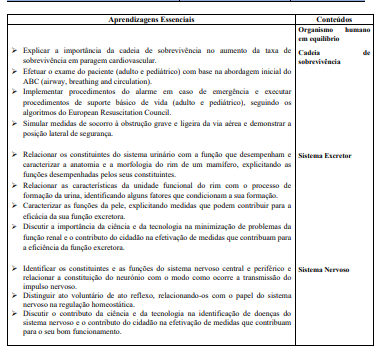
This document outlines essential learning objectives and content related to human body systems, focusing on survival chains, the excretory system, and the nervous system. It emphasizes the importance of understanding these systems for medical emergencies and effective health interventions.
Number of questions : 8
Breathing Mechanics and Spirometry
Biology
Human Physiology
Respiratory System
15/02/2026
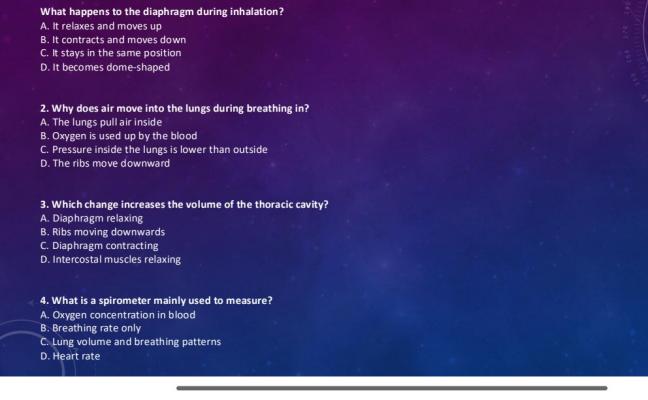
This document covers the mechanics of breathing, focusing on the diaphragm's role, air pressure differences, and the use of a spirometer to measure lung function.
Number of questions : 8